Proudly serving Phoenix, Scottsdale, Mesa, Glendale, Tempe, Chandler & surrounding areasCall or Text 24/7: 602-559-1353
Aerial drone view of Phoenix, AZ, showing residential neighborhoods with terracotta roofs and desert landscaping.

Whole-Home Surge Protection Installation in Phoenix, AZ for Type 1 & 2 Devices

Phoenix House Rewiring installs whole-home surge protection in Phoenix, AZ, to help safeguard appliances, electronics, and hardwired equipment. We install Type 1 and Type 2 surge protective devices at the service entrance or main electrical panel. Electrical panel upgrades, troubleshooting, and safety inspections help identify the work your installation needs. Our electrical services also include aluminum and knob and tube wiring replacement, dedicated circuits, GFCI and AFCI upgrades, circuit breaker replacement, and outlet and switch installation.

Monsoon lightning, utility switching, and appliances cycling on and off can expose your home to sudden voltage spikes. A hardwired surge protective device adds a first line of defense across the circuits supplied by your panel. Our licensed electricians assess panel condition, grounding, and equipment compatibility before recommending protection. Call to discuss your electrical concerns and get an itemized quote for the work.

We install UL 1449-rated devices and can coordinate panel protection with secondary protection for sensitive electronics. The assessment also identifies wiring or grounding concerns that a surge protector alone cannot resolve.

Phoenix House Rewiring provides whole-home surge protection in Phoenix and nearby Scottsdale, Tempe, Mesa, Glendale, and Chandler.

★ ★ ★ ★ ★4.9/5 Customer Satisfaction · 29 Years of Electrical Experience · 2,500+ Electrical Projects Completed · Licensed, Bonded & Fully Insured · Rewiring Homes Across the Valley

Whole-Home Surge Protection Options and Benefits

What Does a Whole-Home Surge Protector Do?

A whole-home surge protective device, or SPD, limits transient voltage spikes at the service entrance or electrical panel. It diverts surge current away from connected equipment, helping reduce the voltage that reaches household circuits.

This panel-level protection reaches equipment that a plug-in strip cannot serve, including hardwired air conditioning and other permanently connected appliances. Secondary protection at sensitive electronics can add another layer beyond the main panel.

Surge suppression technology uses components such as metal oxide varistors, or MOVs, to respond to voltage spikes. Device selection, short conductor runs, and proper grounding all matter to the completed installation. No residential SPD guarantees protection against a direct lightning strike.

Protection for the Equipment Your Home Relies On

Modern appliances contain electronic controls that can be damaged by transient voltage. A coordinated approach helps reduce surge exposure across household circuits and at sensitive equipment.

  • Helps protect HVAC controls and hardwired air conditioning equipment
  • Adds surge protection for refrigerators and electronic appliance controls
  • Supports protection for smart thermostats and home automation hubs
  • Helps safeguard video doorbells and networked security equipment
  • Extends panel-level protection to garage door openers and pool equipment
  • Addresses utility-side spikes and appliance-generated transients
  • Combines main-panel and point-of-use protection where appropriate
  • Provides visible device status when an indicator-equipped SPD is selected
Panel Protection and Electrical Support

Surge Protection Installation Services

A surge protector works as part of your electrical installation. We assess the main panel, wiring, and grounding, then explain whether the project calls for a straightforward SPD installation or supporting electrical work.

Hardwired Surge Protector Installation

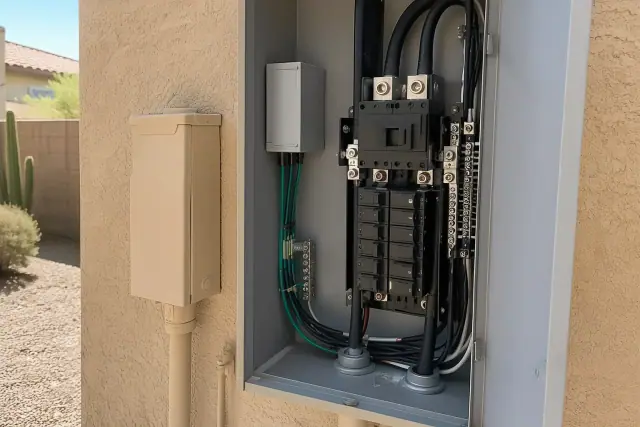
Hardwired surge protector installed next to a home electrical panel in Phoenix, AZ.

We install a compatible SPD at the service entrance or main panel to limit incoming transient voltage. Placement and conductor routing receive close attention because unnecessarily long connections can reduce protection effectiveness.

Request Estimate

Coordinated Surge Protection

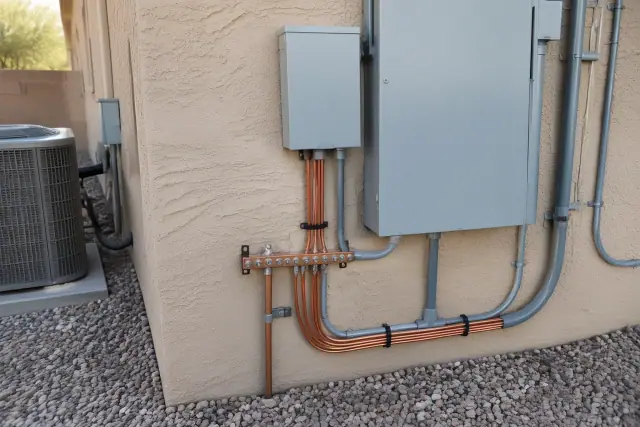
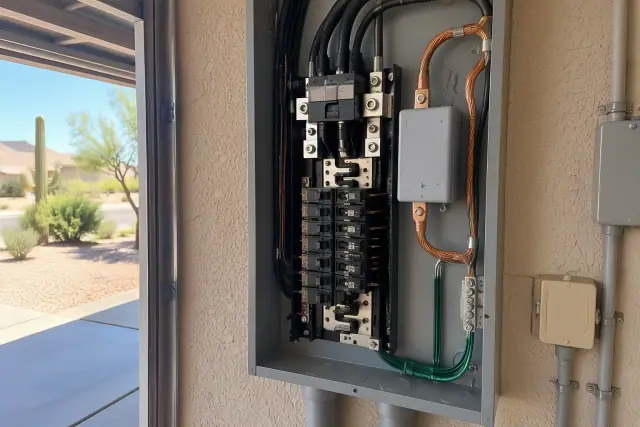
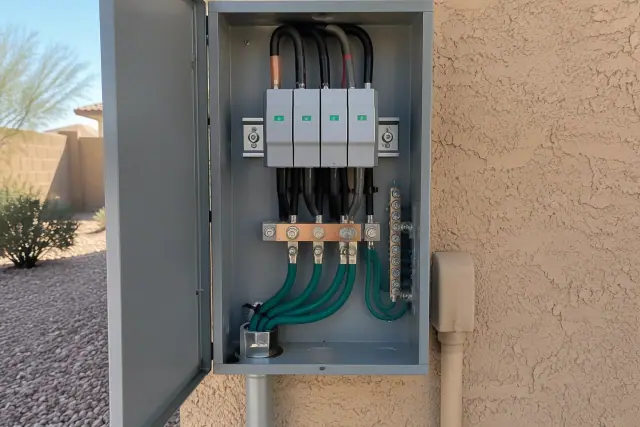
Whole-home surge protection equipment on a stucco wall in Phoenix, AZ, with copper bonding conductors.

Dual-stage protection combines a primary device at the panel with secondary protection near sensitive equipment. We discuss the devices and locations that suit your home, including electronics exposed to smaller transients generated by appliance motors.

Request Estimate

Electrical Panel Upgrades

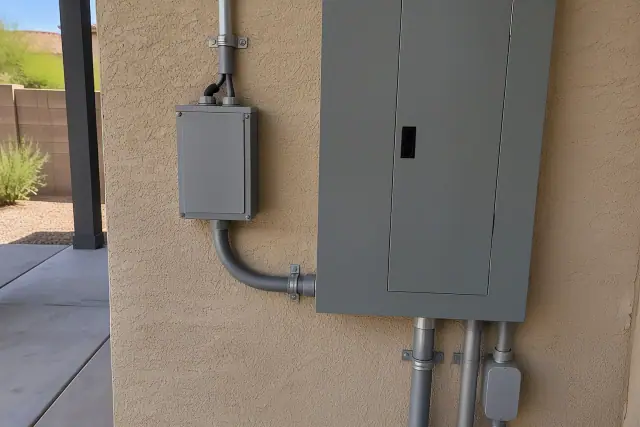
Electrical panel upgrade with a deactivated breaker box and new conduit on a stucco wall in Phoenix, AZ.

An older panel may need attention before a surge protector can be added properly. We assess panel condition, available space, and device compatibility, and include any needed panel upgrade work in the project scope.

Request Estimate

Electrical Safety and Grounding Inspections

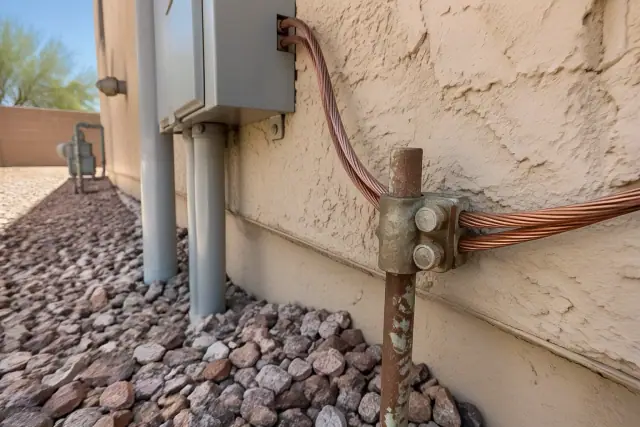
Electrical grounding inspection at a residential utility area in Phoenix, AZ.

We inspect the electrical installation for grounding concerns and other conditions that can undermine surge protection. A safety inspection is especially useful when the home has aging wiring or an existing SPD with an uncertain status.

Request Estimate

Aluminum and Knob and Tube Wiring Replacement

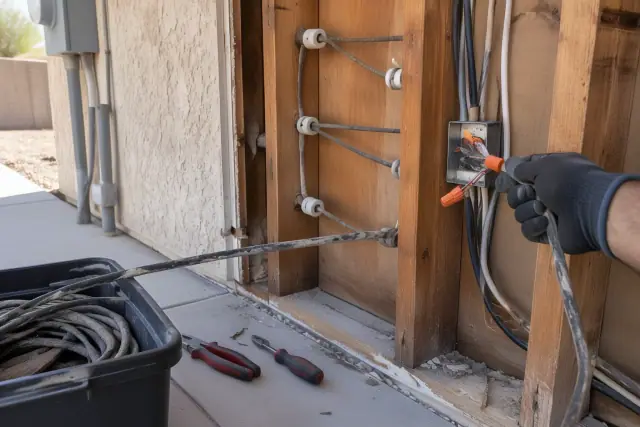
Contractor updating old wiring near a stucco wall of a Phoenix, AZ home.

Surge protection does not correct aging wiring. Where aluminum or knob and tube wiring is present, we assess its condition and discuss replacement work alongside panel protection so the underlying electrical concerns receive attention.

Request Estimate

Electrical Troubleshooting and Diagnostics

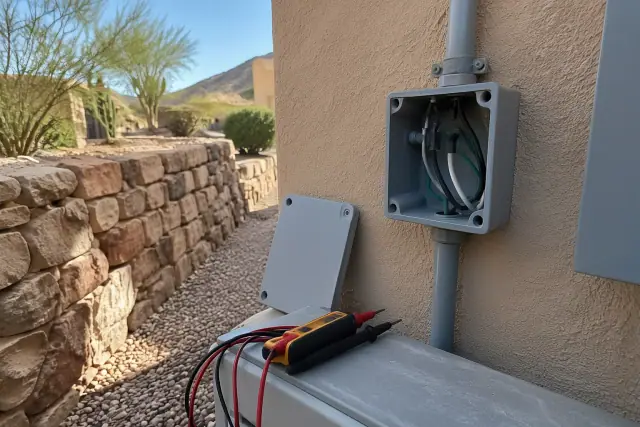
Test probe and unpowered junction box for whole-home surge protection in Phoenix, AZ.

Flickering lights and appliance problems deserve diagnosis before they are attributed to surges. We assess wiring and panel connections, explain the findings, and discuss related work such as circuit breaker replacement or dedicated circuit installation when needed.

Request Estimate
Device Types and Protection Features

Compare Surge Protection Options

Type 1, Type 2, and Type 3 devices serve different installation locations. Coordinated protection combines those roles, while features such as status indicators help you monitor the selected equipment. The right combination depends on the panel and the appliances you want to protect.

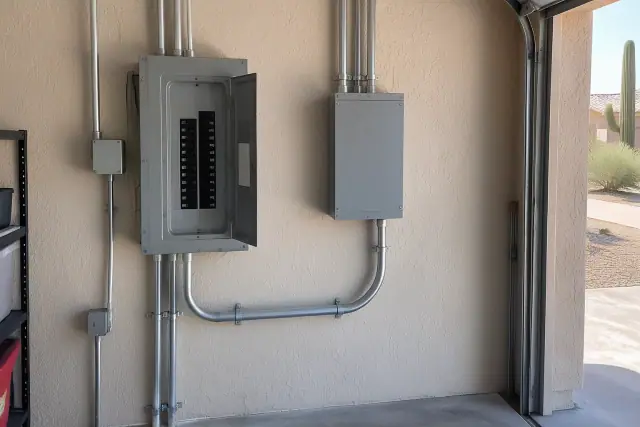
Whole home surge protector wired to a main service box on a garage wall in Phoenix, AZ.

Type 1 Service-Entrance Protection

A Type 1 SPD is an option for protection at the service entrance. We match the device to the electrical service and assess its installation location as part of the panel review.

  • Protection positioned at the service entrance
  • Hardwired connection suited to the selected device
  • UL 1449-rated equipment
  • Panel and service compatibility assessment
  • Grounding reviewed before installation
Request Estimate
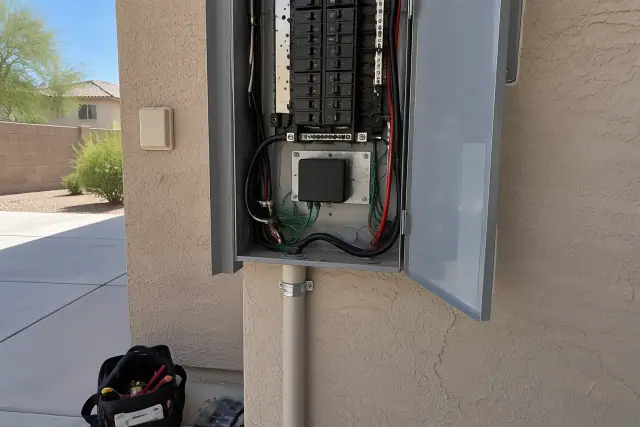
Type 2 main-panel surge protection connected to grounding conductors in a Phoenix, AZ home.

Type 2 Main-Panel Protection

A Type 2 SPD adds protection at the main electrical panel. For many Phoenix homes, we recommend considering a surge current rating of at least 40kA per phase, with the final device matched to the panel and exposure.

  • Protection for circuits supplied by the main panel
  • Compatible breaker arrangement assessed
  • Short, direct conductor routing
  • Surge current capacity considered during selection
  • Installation checked before handover
Request Estimate
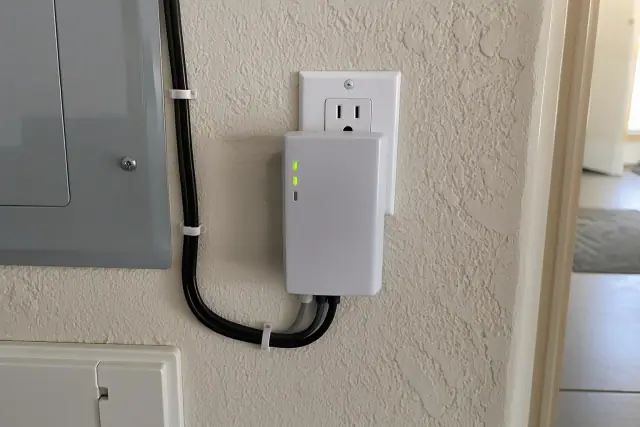
Type 3 point-of-use surge protection device wired on an indoor wall in Phoenix, AZ.

Type 3 Point-of-Use Protection

Secondary Type 3 protection can supplement the main-panel SPD at sensitive electronics. It is a coordinated layer for selected equipment, rather than a replacement for hardwired whole-home protection.

  • Additional protection at compatible electronics
  • Useful for entertainment equipment
  • Options for home automation hubs
  • Secondary protection for networked devices
  • Selected to work with panel-level protection
Request Estimate
Dual-stage whole-home surge protection wired into a service box on a stucco wall in Phoenix, AZ.

Dual-Stage Surge Protection

A dual-stage arrangement combines panel protection with a secondary layer near vulnerable equipment. This approach addresses incoming spikes while accounting for the smaller transients produced within the home.

  • Primary protection at the electrical panel
  • Secondary protection near sensitive equipment
  • Attention to motor-generated voltage spikes
  • Coordinated device selection
  • Scope based on household equipment and risk
Request Estimate
Status indicators and replaceable modules for whole-home surge protection in Phoenix, AZ.

Status Indicators and Replaceable Modules

We favor equipment with visible status indicators and consider replaceable modules when selecting a device. These features help make maintenance needs clearer after a significant surge event.

  • Visible indication of device status
  • Condition reviewed during electrical inspections
  • Checks after a significant surge
  • Replaceable module options considered
  • Clear explanation when replacement is needed
Request Estimate
A Device Matched to Your Home

Choose the Right Surge Protection Approach

The best choice for 2026 depends on panel type, home size, and surge exposure rather than a single product ranking. We consider UL 1449 ratings, surge current capacity, visible status indicators, and whether secondary protection is useful. IEEE C62.41 surge-test references help explain performance information, but compatibility and installation details still matter.

Licensed Electrical Work

Our electricians hold Arizona Registrar of Contractors licensing. We assess the installation against applicable electrical requirements and coordinate permitting and inspection as part of the project.

Experience with Phoenix Homes

We have worked on residential and commercial projects across the metro, including mid-century block homes in Sunnyslope and new construction in Desert Ridge. That range of properties informs how we assess panel condition, existing wiring, and installation needs.

Upfront, Itemized Quotes

We explain the device, installation work, and any supporting panel or grounding work before the job begins. Your itemized quote shows why the scope differs between a standard main-panel installation and a more involved coordinated system.

Start with the Electrical Conditions

Why Choose Our Surge Protection Service?

We look at the conditions that affect protection: nearby lightning, utility switching, appliance motors, grounding, and the status of existing devices. The recommendation connects those concerns to the panel and equipment in your home, with a clear explanation of what the installation can and cannot do.

Request a Panel Assessment

Monsoon Lightning Exposure

Phoenix storms bring lightning activity roughly June through September, from Arcadia to Ahwatukee and across the Salt River Valley. Nearby strikes can send surges through utility lines even when the strike is not on your property. Panel protection helps reduce that exposure without promising protection from every lightning event.

Utility Switching and Grid Fluctuations

Arizona Public Service and Salt River Project operate distribution equipment across the Valley. Switching events, equipment faults, and changing electrical loads can produce transient voltage spikes that reach household circuits.

Surges from Appliance Motors

Roughly 80% of power surges originate inside the home. Air conditioning compressors, pool pumps, and refrigerators can generate transients as their motors cycle. Protection planning should account for these everyday sources as well as storms.

Grounding and Connection Problems

An SPD depends on a properly connected electrical installation. Inadequate grounding and loose panel connections can compromise its effectiveness, so those conditions need assessment before a new device is treated as the solution.

A Surge Protector That Needs Replacement

An SPD can reach the end of its useful life after a significant surge while the rest of the electrical system still appears to work. A status indicator and periodic inspection help identify a device that is no longer providing its intended protection.

Power Strips Leave Hardwired Equipment Exposed

A $15 power strip does not provide panel-level protection for hardwired HVAC equipment. Full HVAC system replacement can frequently cost $4,000 to $8,000, making air conditioning equipment an important part of the protection discussion. A main-panel SPD helps address equipment beyond the outlets used by plug-in strips.

From Assessment to Verification

Our Surge Protection Installation Process

We begin with the electrical conditions at your property and finish with device status and grounding checks. Each step helps establish a suitable installation and a clear understanding of future inspection needs.

01.

Assess the Panel and Electrical Load

We review the panel, available space, existing wiring, and major electrical equipment. The assessment identifies compatibility concerns and any additional work needed before the SPD is installed.

02.

Review Grounding and Connections

We assess grounding and panel connections so the surge protector has the electrical conditions it needs to function. If corrections are needed, we explain them as part of the proposed installation scope.

03.

Select the Device and Confirm the Quote

We match the device type and protection arrangement to the panel and household equipment. You receive an upfront, itemized quote covering the SPD and any identified panel or grounding work.

04.

Coordinate Permitting and Inspection

We address applicable National Electrical Code requirements and City of Phoenix permitting during project planning. Permit handling and inspection scheduling are coordinated so the installation can be reviewed against the requirements that apply to your work.

05.

Mount and Connect the Surge Protector

Our electricians mount and connect the selected SPD using an arrangement suited to the device and panel. Short, direct conductor runs and proper grounding connections are part of the installation.

06.

Verify Status and Explain Maintenance

We check the device's status indication and verify grounding continuity after installation. We also explain what to watch for after a major surge and when the unit should be inspected or replaced.

Discuss Your Home's Electrical Needs

Schedule a Surge Protection Assessment

Talk with Phoenix House Rewiring about your panel, sensitive electronics, and concerns after recent storms or appliance problems. We will assess the installation and explain the recommended work in an itemized quote.

Answers for Phoenix Homeowners

Whole-Home Surge Protection FAQs

Learn how panel protection works, what affects installation cost, and how to recognize when a device needs attention. For a recommendation specific to your home, start with a panel assessment.

Discuss Surge Protection

Most hardwired whole-home surge protectors last 7 to 10 years under normal conditions, but a major surge can exhaust a device sooner. Visible status indicators help reveal when attention is needed. We recommend an annual inspection before storm season and a status check during electrical safety inspections.

A whole-home SPD helps reduce damage risk from nearby lightning-induced surges traveling through electrical lines. It cannot guarantee protection against a direct strike on the home. The installation should be viewed as surge-risk reduction, with its limits explained clearly.

Hardwired installation involves work inside the electrical panel and should be handled by a qualified electrician. Incorrect connections or grounding can create hazards and undermine the device's effectiveness. We assess the panel and address the installation and inspection requirements that apply to the work.

Central air conditioning, smart home equipment, and seasonal lightning exposure are good reasons to discuss panel protection. Flickering lights or appliance problems call for electrical diagnosis as well as a review of surge protection. Older wiring and grounding concerns should be assessed because adding an SPD does not resolve those issues.

High-draw appliances such as refrigerators, space heaters, and sump pumps generally should not rely on a standard plug-in surge strip. The strip may be unsuitable for their sustained electrical load. Discuss hardwired protection and the appropriate circuit arrangement for the equipment instead.

New residential services and service equipment replacements can trigger surge-protection requirements under the National Electrical Code. The requirements for an existing home depend on the work being performed and the locally adopted rules. We determine the applicable requirements during the panel assessment and explain whether protection is required for the project.

Common concerns include a device that has reached the end of its useful life, inadequate grounding, loose connections, and a device poorly matched to the home's exposure. A failed or exhausted unit can be easy to overlook while household power still works. Checking status indicators and having the installation inspected helps identify these issues.

Installation in the Phoenix metro typically ranges from $72 to $723, with most homeowners around $310 for a standard hardwired unit at the main panel. Device selection, panel condition, grounding work, and permit fees affect the total. We provide an itemized quote before work begins, including any panel upgrade or coordinated protection selected.

Secondary protection can add a useful layer for sensitive electronics even when the main panel has an SPD. A coordinated arrangement pairs the panel device with suitable protection near equipment such as entertainment systems or home automation hubs. A plug-in unit alone cannot provide the same reach to hardwired household equipment.

We consider panel compatibility, household equipment, surge exposure, and whether a Type 1 or Type 2 installation is appropriate. UL 1449 ratings, surge current capacity, visible status indicators, and replaceable module options help guide the selection. Secondary Type 3 protection may be appropriate for selected sensitive electronics.

Older wiring does not remove the need for surge protection, but it can make a broader electrical assessment useful. Aluminum wiring, knob and tube systems, and inadequate grounding may need separate corrective work. We explain those conditions and any recommended wiring or panel work before the SPD installation.

HVAC equipment, refrigerators, washers and dryers with electronic controls, garage door openers, and networked security systems can benefit. Smart thermostats, video doorbells, and entertainment equipment also contain sensitive circuitry. Protection selection should account for both hardwired appliances and electronics connected at outlets.

Phoenix House Rewiring serves Phoenix, Scottsdale, Tempe, Mesa, Glendale, Chandler, and the greater Maricopa County metro area. Our work includes residential and commercial properties. Call to discuss the panel and equipment at your location.