Proudly serving Phoenix, Scottsdale, Mesa, Glendale, Tempe, Chandler & surrounding areasCall or Text 24/7: 602-559-1353
Aerial drone view of Phoenix, AZ, showing residential neighborhoods with terracotta roofs and desert landscaping.

Electrical Troubleshooting & Diagnostics in Phoenix, AZ for Circuit Fault Testing

Phoenix House Rewiring provides electrical troubleshooting and diagnostics for homeowners in Phoenix, AZ. We trace recurring breaker trips, dead outlets, and flickering lights to the wiring or component causing the problem. Our services include aluminum and knob and tube wiring replacement, panel upgrades, safety inspections, and dedicated circuit installation. We also handle breaker replacement, outlet and switch installation, GFCI and AFCI upgrades, and whole-home surge protection.

Long summer cooling cycles put sustained demand on household circuits, while monsoon storms can bring damaging voltage surges. Older homes in Encanto-Palmcroft, Coronado, and Sunnyslope may also have aging insulation or connections that need closer examination. We use circuit tracing, electrical measurements, and thermal imaging to narrow down the cause before recommending repairs. Tell us what happens and when it happens so we can focus the diagnostic visit on the fault.

Our crew works under Arizona Registrar of Contractors licensing requirements. We document the findings and explain the repair price before work begins.

Phoenix House Rewiring provides electrical troubleshooting and diagnostics in Phoenix, Scottsdale, Tempe, Mesa, Glendale, and the greater Salt River Valley.

★ ★ ★ ★ ★4.9/5 Customer Satisfaction · 29 Years of Electrical Experience · 2,500+ Electrical Projects Completed · Licensed, Bonded & Fully Insured · Rewiring Homes Across the Valley

Electrical Troubleshooting Options & Benefits

What Does Electrical Troubleshooting Involve?

Electrical troubleshooting connects a visible symptom to its physical cause. A dead outlet, repeated breaker trip, or intermittent light can originate in a device, a connection, or a wiring run, so replacing the first suspect part may leave the fault unresolved.

We begin with load and continuity checks, then measure voltage at the panel and affected circuit. Testing across switches, junctions, and devices helps isolate the section that needs repair.

Diagnostics can focus on one troublesome circuit or form part of a whole-home inspection. For a broader inspection, we document panel amperage, breaker condition, wire gauge, grounding, bonding, and outlet and switch operation.

How Testing Helps You Plan Repairs

A useful diagnosis tells you what failed, where it failed, and which repair addresses it. Measurements also help distinguish an isolated device problem from a circuit or panel capacity issue.

  • Locate faults hidden behind drywall or inside junction boxes
  • Separate overloads from shorts and ground faults
  • Check connection heat with infrared imaging
  • Map outlets and switches to their circuit breakers
  • Assess capacity for HVAC, pool equipment, and EV charging
  • Identify deteriorated insulation and damaged conductors
  • Review grounding, polarity, and protective devices
  • Confirm repair results by retesting under normal load
Find the Cause

Electrical Diagnostic Services

We choose the test method around the symptom and the circuit involved. These diagnostic services help locate intermittent faults, assess electrical demand, and establish whether the next step is a device repair, circuit work, or a broader upgrade.

Circuit Tracing and Fault Isolation

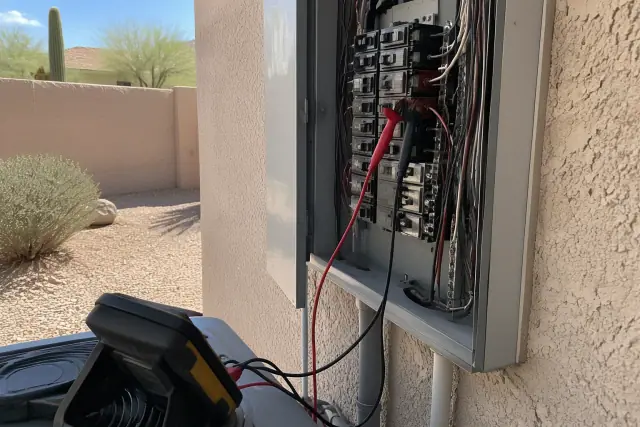
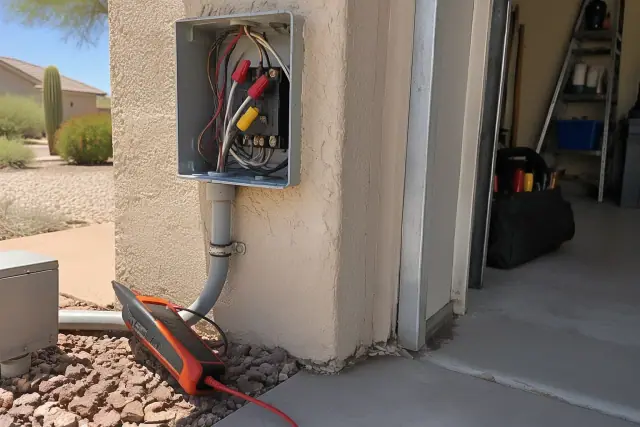
Diagnostic tracing tool resting near an open junction box with color-coded wiring at a residence in Phoenix, AZ.

Circuit tracing follows the path from a breaker to the affected outlets, switches, and junctions. We narrow the search section by section and document which breaker supplies each device, helping untangle circuits altered during earlier renovations.

Request Estimate

Load Testing and Power Quality Checks

Electrical load testing and power quality checks at a residential property in Phoenix, AZ.

We measure current draw and voltage drop under load, then check how demand is distributed across the panel. Testing is especially useful when multiple AC condensers or pool equipment run alongside household appliances and the cause of recurring trips is unclear.

Request Estimate

Thermal Imaging of Connections

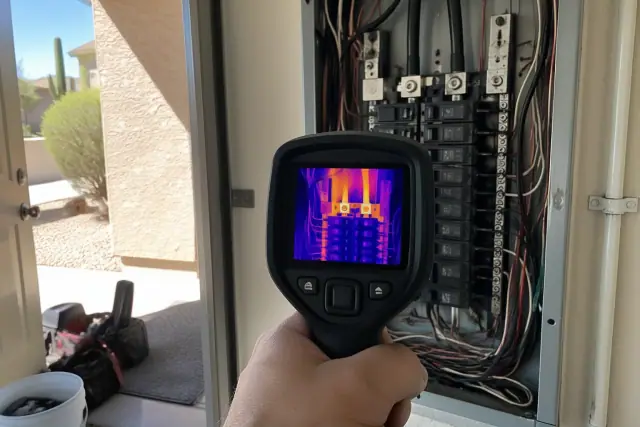
Technician using a thermal camera for electrical diagnostics at a home in Phoenix, AZ.

Infrared thermal cameras help identify unusual heat at overloaded or deteriorating connections. We use these findings alongside electrical measurements to investigate trouble spots before visible damage becomes the only clue.

Request Estimate

Insulation Resistance Testing

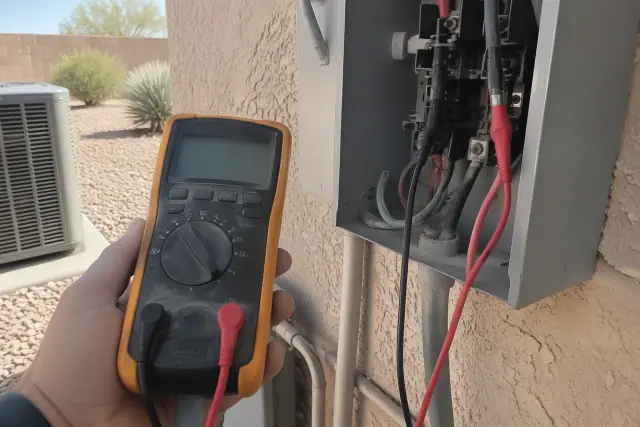
Contractor photo of insulation resistance testing for electrical troubleshooting in Phoenix, AZ.

An insulation resistance tester, also called a megohmmeter, helps find compromised insulation between conductors and ground. A reading below 1 megohm is a reason to investigate insulation breakdown, with circuit conditions guiding how we interpret it. We then trace the affected wiring run segment by segment.

Request Estimate

Whole-Home Electrical Safety Inspections

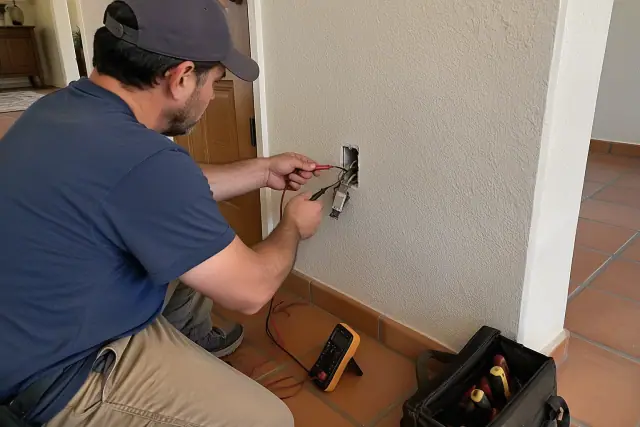
Contractor performing a home electrical safety inspection in Phoenix, AZ, with an unpowered testing device.

Our inspection follows the system from the service entrance and panel to individual circuits and devices. We look for double-tapped breakers, missing bonding, overfilled junction boxes, and conductors that are undersized for their circuit load.

Request Estimate

Outlet, Switch, and Protection Testing

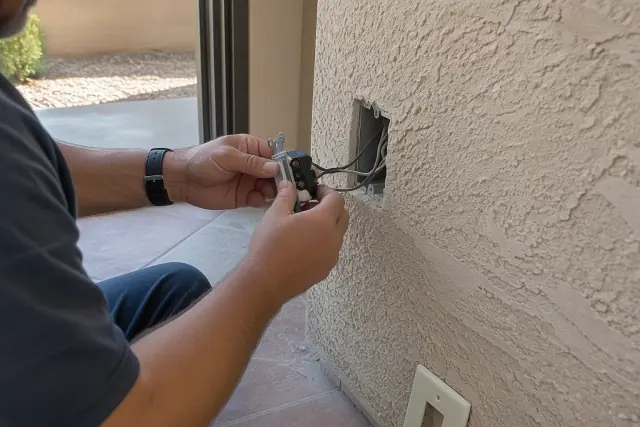
Electrical testing equipment near a stucco wall and tile floor in a Phoenix, AZ home.

We check outlets for polarity, grounding, and voltage and cycle switches to verify operation. Testing existing GFCI and AFCI devices helps identify failed protection and determine where an upgrade belongs in the repair scope.

Request Estimate
From Diagnosis to Repair

Repair and Upgrade Options

The right repair depends on the test results, wiring condition, and household demand. We explain whether the fault calls for targeted replacement or whether wiring, panel, circuit, or surge-protection work would address a broader concern.

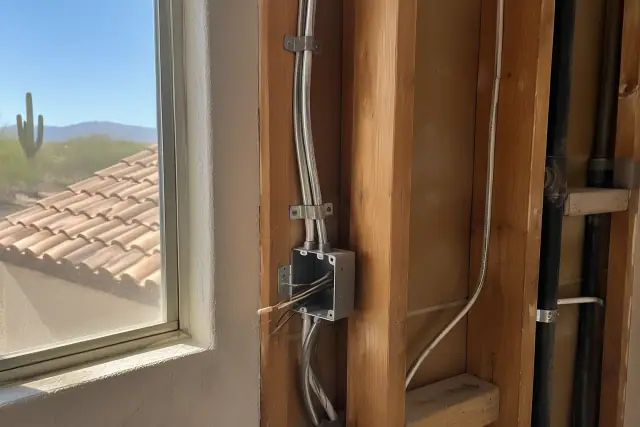
Contractor doing aluminum wiring replacement near wooden studs in a Phoenix, AZ home.

Aluminum Wiring Replacement

Aluminum branch wiring was widely installed in Phoenix homes between 1965 and 1973. Oxidation and expansion at connection points can raise resistance and heat, making those connections a focus during diagnostics.

  • Inspect aluminum-to-copper connection points
  • Check splices for corrosion and heat damage
  • Replace affected branch wiring with copper
  • Size conductors to applicable NEC ampacity requirements
  • Evaluate approved copper-aluminum transition connectors
Request Estimate
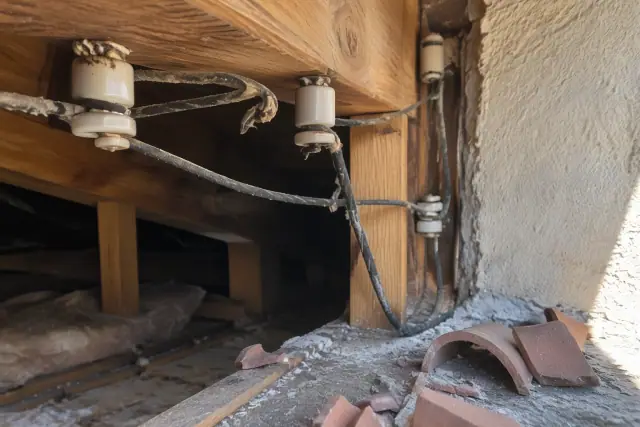
Contractor photo of knob and tube and cloth wiring replacement in Phoenix, AZ.

Knob and Tube and Cloth Wiring Replacement

Some older Coronado and Willo homes still contain knob and tube or deteriorated cloth-insulated wiring. We assess brittle insulation, missing grounding, and accessible wiring paths to plan replacement.

  • Identify legacy wiring and damaged insulation
  • Review the absence of a grounding conductor
  • Check insulation coverage around knob and tube runs
  • Plan new wiring routes around available wall access
  • Use NM-B or THHN wiring as the installation requires
Request Estimate
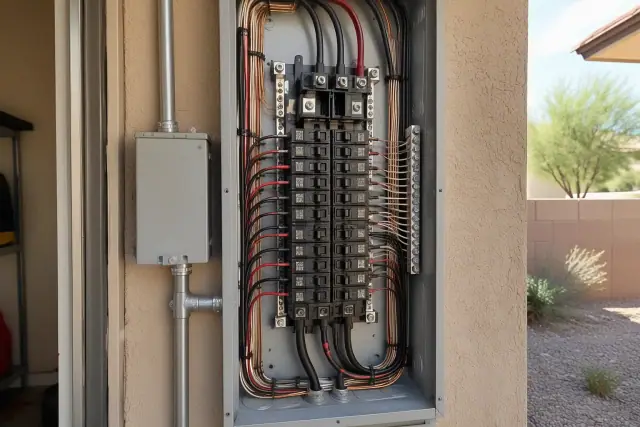
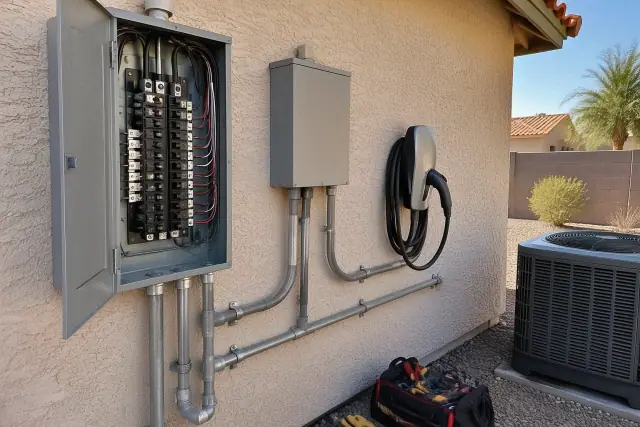
Electrical panel and breaker upgrades on a residential utility wall in Phoenix, AZ.

Electrical Panel and Breaker Upgrades

Older homes commonly have 100 amp panels, and many homes built before 1980 need a capacity review for today's loads. When demand supports the need, a 200 amp panel upgrade can be part of the solution.

  • Assess panel capacity against household demand
  • Inspect breaker condition and signs of overheating
  • Match replacement breakers to manufacturer specifications
  • Coordinate service connection work with APS or Salt River Project
  • Arrange required electrical permits through the City of Phoenix
Request Estimate
Electrical troubleshooting and device upgrades on a home in Phoenix, AZ, showing heavy-duty cabling.

Dedicated Circuits and Device Upgrades

High-draw appliances may need their own breaker and correctly sized conductors. We also replace faulty outlets and switches and review GFCI and AFCI protection as part of circuit and safety work.

  • Dedicated circuits for ranges and dryers
  • Circuits sized for EV chargers and spa equipment
  • Outlet and switch replacement or installation
  • GFCI protection for appropriate wet and outdoor locations
  • AFCI upgrades for applicable household circuits
Request Estimate
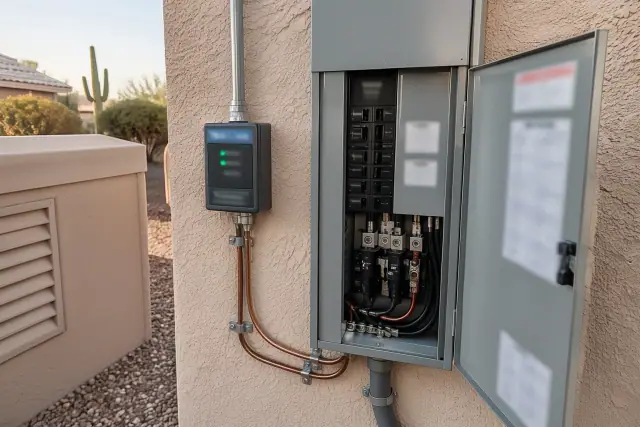
Whole-home surge protection installation on a stucco exterior in Phoenix, AZ.

Whole-Home Surge Protection

Lightning and grid switching during monsoon season can expose HVAC control boards, appliances, and electronics to voltage spikes. Panel-mounted surge protection and point-of-use protection provide complementary coverage.

  • Install surge suppression at the electrical panel
  • Evaluate the condition of existing surge devices
  • Review protection after a major surge event
  • Pair panel protection with point-of-use devices
  • Consider sensitive thermostats, network equipment, and AC controls
Request Estimate
Testing That Fits the Problem

Choosing the Right Diagnostic Approach

A symptom that appears only when cooling equipment starts needs a different investigation from one dead receptacle. We combine your observations with readings and wiring condition to choose the next test and explain the resulting repair recommendation.

Measurements Before Recommendations

Clamp-on ammeters, true-RMS multimeters, insulation resistance testers, and thermal cameras provide different pieces of the diagnosis. We use those readings to establish a repair scope, with data-logging meters available for faults that a brief test does not capture.

Experience with Older Phoenix Wiring

We work on 1960s tract homes with aluminum branch circuits and mid-century bungalows with aging cloth-insulated wiring. That context helps us assess old junctions, undocumented circuit changes, and the condition of wiring routes before proposing replacement.

Clear Findings and Repair Pricing

We document what the tests reveal and walk you through the work that needs attention. You receive a clear price before repair work begins, with panel upgrades, rewiring, and dedicated circuit installations priced according to their diagnosed scope.

Recognize the Symptoms

Common Electrical Problems We Diagnose

Recurring symptoms can point to different underlying faults, even when they look alike from the room. Our diagnostics examine the affected circuit, its connections, and connected demand to determine which explanation fits your home.

Request a Diagnostic Visit

Breakers That Keep Tripping

A recurring trip can indicate an overload, short circuit, or ground fault. We compare current draw with the breaker rating, check shared-neutral issues, and test the breaker itself; after 15-20 years of service, some breakers can weaken and trip at lower thresholds.

Flickering or Dimming Lights

An intermittent flicker can come from thermal expansion at a loose connection. We examine neutral connections and use extended monitoring when the fault appears only occasionally, so a normal reading during a brief visit does not end the investigation.

Dead Outlets or Unresponsive Switches

An outlet that has lost power or a switch that no longer operates needs tracing back through its circuit. We check voltage, continuity, polarity, and grounding to distinguish a failed device from a wiring or connection problem.

Moisture-Related Ground Faults

Monsoon rain can expose exterior outlets to moisture, while junction boxes near irrigation lines may develop corrosion. We investigate the affected connections and test ground-fault protection to identify the repair and any appropriate protective-device upgrade.

Brittle or Damaged Wiring Insulation

Homes over 30 years old in areas such as Arcadia and Maryvale can have insulation stressed by attic temperatures that regularly exceed 130°F in summer. We also look for rodent damage and cloth insulation that cracks when disturbed, then assess the affected wiring for replacement.

Warm Plates or Burning Odors

Warm outlet plates, discoloration, and a burning smell can point to an overheating connection that needs prompt professional attention. We investigate those symptoms as priority calls and check the relevant wiring, splices, and panel components for the source of heat.

From First Symptom to Final Test

Our Electrical Diagnostic Process

We work from the symptom toward a verified repair, documenting findings along the way. The visit includes an explanation of the proposed work and its price before repairs begin.

01.

Describe the Symptom

Tell us which lights, outlets, or appliances are affected and when the problem occurs. Details such as a trip during AC startup or flickering that comes and goes help guide the initial inspection.

02.

Inspect the Circuit and Devices

We visually examine the affected equipment and accessible connections. Depending on the scope, that review includes the service entrance, breaker condition, conductor size, grounding, and bonding.

03.

Measure Electrical Performance

We check load, voltage, and continuity using test equipment suited to the circuit. Insulation testing, thermal imaging, or longer monitoring can help investigate faults that basic measurements do not fully explain.

04.

Isolate the Fault

Testing narrows the problem across the circuit's devices, junctions, and wiring sections. We compare the evidence to identify whether the cause is a loose connection, damaged insulation, excess demand, or a failing component.

05.

Review the Repair and Price

We explain the findings and the work needed to address them. The repair price comes before work begins, and broader upgrades are scoped separately when the diagnosis points to a wiring or capacity issue.

06.

Repair and Retest

After the repair, we retest the circuit under normal load to verify the result. We review the findings with you and explain any additional concerns identified during the visit.

Get the Fault Checked

Schedule Electrical Diagnostics

Tell Phoenix House Rewiring about the breaker trips, flickering lights, or dead outlets you are experiencing. Call to discuss a diagnostic visit and current scheduling, including after-hours, weekend, or holiday availability when capacity allows.

Before Your Diagnostic Visit

Electrical Troubleshooting FAQs

These answers cover diagnostic costs, inspection timing, common fault symptoms, and the tests used to plan repairs. The right scope depends on what is happening in your home and what the circuit measurements reveal.

Call About Diagnostics

Phoenix-area diagnostic or service-call fees typically run $75 to $150, while flat troubleshooting charges often fall between $120 and $250 depending on complexity. A failed switch generally takes less investigation than an intermittent short spanning multiple circuits. Panel upgrades, rewiring, and dedicated circuits are priced separately after diagnosis. Phoenix House Rewiring explains the repair price before work begins.

Yes, electrical diagnostics use clamp meters, multimeters, insulation resistance testers, and circuit tracers to measure current, voltage, resistance, and continuity. The readings help distinguish an overload, short, ground fault, or failing component. We use that evidence to focus the repair work.

Note which devices are affected, when the problem occurs, and whether it coincides with a particular appliance running. Tell the electrician about repeated trips, flickering, discoloration, or unusual odors. Panel testing and hidden-wiring investigation require professional equipment and training; your observations help guide that work.

The five general steps are gathering symptom information, visually inspecting the circuit, testing voltage and continuity, isolating the faulty section, and verifying the repair under normal load. Each step narrows the possible causes before parts are replaced. We also explain the findings and repair price before beginning the repair.

Repeated breaker trips, warm outlet or switch plates, unexplained flickering, burning odors, and visible discoloration can signal a wiring or connection problem. Aging aluminum, knob and tube, or cloth-insulated wiring deserves particular attention when those symptoms appear. A diagnostic inspection helps establish the cause and repair scope.

An overload occurs when connected demand exceeds a circuit's rating. Window units, pool equipment, and multiple AC condensers can place heavy demand on original 1970s wiring that no longer suits the household's use. Load testing helps determine whether a dedicated circuit or panel upgrade is needed.

A whole-home electrical safety inspection typically takes one to three hours, depending on home size, wiring age, and the number of circuits and devices. Older homes in Willo or Coronado may take longer when legacy wiring needs additional testing. We walk through the findings afterward so you understand the work that needs attention.

We look for patterns in the symptom and check connections that may change as they heat and cool. Data-logging meters can monitor performance over time and capture a fault missed by a single reading. Those results help direct further circuit tracing.

The diagnosis determines whether an isolated device, connection, or wiring section needs repair. Widespread deterioration in aluminum, knob and tube, or cloth-insulated wiring may call for a broader replacement plan. We explain what the inspection shows before proposing that scope.

Load measurements and panel capacity checks help separate a circuit-specific demand problem from insufficient overall capacity. A high-draw appliance may need its own circuit, while broader demand from HVAC, EV charging, and other equipment may call for a panel upgrade. We base the recommendation on the measured load and existing equipment.

Yes, we test existing protective devices and review their condition as part of electrical safety work. Ground-fault and arc-fault protection serve different purposes, so the appropriate upgrade depends on the circuit and location. We review the work against applicable National Electrical Code requirements, also known as NFPA 70, as adopted locally.

Whole-home surge protection at the panel helps limit voltage spikes from lightning-related events and grid switching. Point-of-use protection adds coverage for sensitive electronics and equipment. Existing surge devices should be evaluated after a significant event because their protective components may have been damaged.

Ask about current availability when you call, because after-hours scheduling depends on dispatch load. We also try to accommodate weekend and holiday requests when capacity allows. Describe a burning smell, a breaker that will not reset, or a dead panel when calling so we can assess the priority of the request.