Panel Capacity or Circuit Damage?
Sound copper branch wiring may allow a standalone panel upgrade. An undersized 100-amp service in a 1970s or 1980s home is a different problem from deteriorated wiring inside the walls.
Phoenix House Rewiring explains when a panel upgrade, partial rewire, or surface-mounted wiring can address an electrical problem without replacing every circuit. For Phoenix homeowners facing repeated breaker trips, warm outlets, or an inspection report flagging old wiring, the answer depends on the condition of the branch circuits as well as the panel.
Sound copper branch wiring may allow a standalone panel upgrade. An undersized 100-amp service in a 1970s or 1980s home is a different problem from deteriorated wiring inside the walls.
Partial rewiring can target kitchens, bathrooms, and laundry areas where load and moisture make defects especially concerning. The remaining circuits need evaluation before work is divided into phases.
Circuit tracing, thermal imaging, and insulation resistance testing help identify where a fault starts. A Phoenix electrical safety inspection typically costs $150-$350 and covers the panel, wiring type, grounding, and device condition.
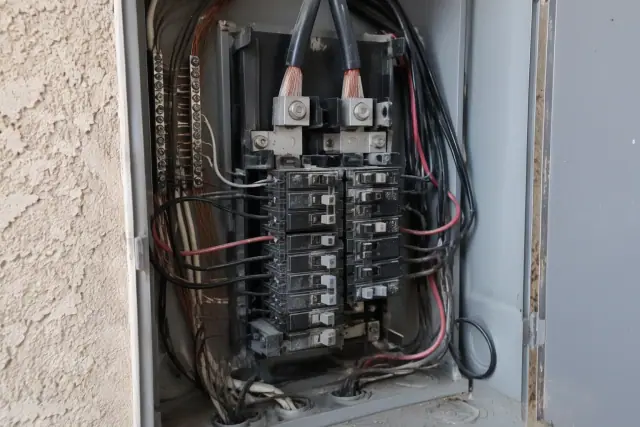
Conductor size and insulation condition help determine whether a panel can be upgraded on its own. A licensed electrician checks the existing circuits before recommending that approach.
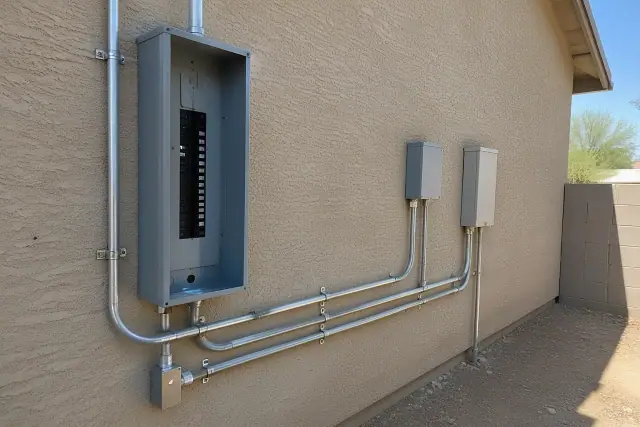
Conduit routed along a baseboard or ceiling offers an alternative where opening plaster walls is impractical. It still involves installing wiring and may not suit every room.
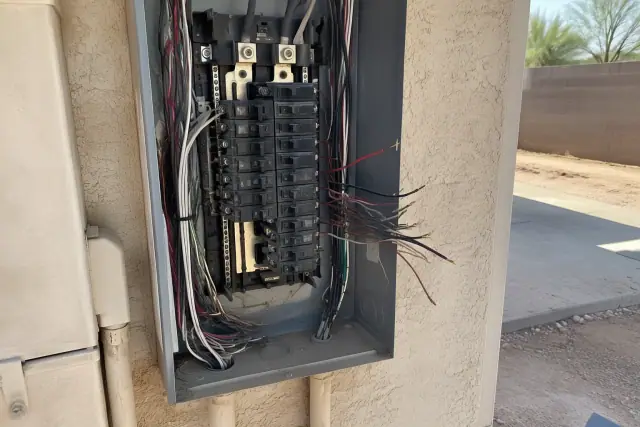
Testing helps establish whether a damaged circuit is an isolated problem or part of wider deterioration. That distinction determines how much existing wiring can reasonably remain.
A new HVAC unit, range, or EV charger may need a dedicated circuit rather than a full rewire. Installation typically costs $300-$800, depending on run length and available panel capacity.
Aluminum branch wiring can develop loose, hot connections as it expands and contracts. Approved copper-aluminum pigtail connectors may be an option where full replacement is not immediately feasible, subject to professional evaluation.
Repeated trips, warm or discolored outlets, unexplained flickering, and a persistent burning smell warrant prompt professional attention. Summer air-conditioning loads can make aging-circuit problems more apparent in July and August.
Knob-and-tube wiring in pre-1950s homes, including homes in Garfield and Willo, lacks a grounding conductor. Brittle insulation, altered splices, and wiring covered by insulation are reasons to discuss replacement with an electrician.
| Option | When It May Fit | Scope and Cost Factors | Key Limitation |
|---|---|---|---|
| Panel replacement or capacity upgrade | Copper branch circuits test sound, but the panel or service needs replacement or more capacity. | Panel replacement typically costs $1,500-$3,000 for panel and labor. A straightforward 200-amp upgrade typically costs $1,800-$3,500; totals including permit, inspection, and utility coordination usually reach $2,000-$4,500. | Leaves existing branch wiring in place; cannot correct damaged insulation or unsafe connections. |
| Dedicated circuit addition | An appliance needs its own circuit and the existing panel has suitable capacity. | Run length and panel capacity determine the installation scope. | Addresses the appliance circuit, not defects elsewhere in the house. |
| Partial rewiring | Testing identifies particular circuits that need replacement while other circuits remain serviceable. | Replace the affected circuits and agree on any later phases after inspection. | Does not resolve deterioration in circuits left in place. |
| Surface-mounted wiring | Finished plaster or other wall-access constraints make concealed cable routes impractical. | Install conduit along suitable baseboard or ceiling routes. | Changes the installation route and remains visible; it is not a repair to existing hidden wiring. |
| Approved aluminum connection remediation | An electrician finds that approved copper-aluminum pigtail connections are suitable where full replacement is not immediately feasible. | Evaluate device connections and document the specified remediation. | Retains aluminum conductors; severely deteriorated wiring may still need replacement. |
| Whole-house rewiring | Knob-and-tube wiring or widespread deterioration makes limited work insufficient. | Phoenix metro projects range from $3,000-$20,000, with most between $6,000 and $12,000; circuit count, access, wall materials, and panel work affect scope. | Replaces the affected wiring throughout the home and requires planning for access, patching, and inspections. |
Smaller upgrades address specific needs once the existing wiring has been evaluated. GFCI protection for kitchens, bathrooms, garages, and exterior outlets typically costs $150-$250 per location including labor; AFCI breakers generally add $50-$100 per breaker above standard breaker pricing. Whole-home surge protection, relevant during Phoenix's monsoon season, typically costs $300-$600 installed at the panel. Individual breaker replacement runs $150-$300 depending on amperage and breaker type, while a new outlet or switch typically costs $100-$200 per device depending on wall access. These measures serve different purposes and do not repair damaged conductors or insulation. A standalone panel upgrade typically runs $1,800-$4,500; ask which service, permit, and inspection items the quoted scope includes.
Copper wiring generally lasts 50-70 years, but age alone cannot establish its condition, especially in Arizona's hot attics. An inspection around the 40-year mark, or when no evaluation has occurred in the last 10 years, can help identify deterioration before choosing a limited upgrade. Pre-1960 cloth-insulated systems, including original 1940s wiring, deserve attention; so does original aluminum branch wiring from the 1960s-1970s, particularly the 1965-1973 installation era. Wall construction also matters: attic or crawlspace access may let an electrician fish cable through cavities, while block construction and finished plaster can require more openings. Surface-mounted conduit changes the route of new wiring; it does not restore the condition of old circuits.
Can you upgrade the panel without rewiring? Often yes, if testing confirms that the copper branch circuits are correctly sized and in acceptable condition. Can rewiring avoid drywall removal? Accessible wall cavities may allow cable fishing with only small access openings, while block walls can require more work. What does a 2,000 sq ft Phoenix home cost to rewire? Typically $8,000-$16,000, depending on wall construction, access, and whether panel replacement is included. Do you need a permit? Rewiring, panel upgrades, and most circuit work require permitting through the City of Phoenix, with rough-in and final inspections as applicable. Can you sell with aluminum wiring? A sale may be possible, but the buyer's lender or insurer may require an inspection report and remediation documentation.
Share the home's approximate age, recurring electrical symptoms, any prior inspection findings, and planned appliance additions. An on-site inspection can establish which circuits need replacement, whether the panel needs an upgrade, and how much wall access the work will require before you approve the scope.