Separate Fire and Shock Protection
AFCI detects arcing associated with damaged wiring or loose connections. GFCI detects current leaking away from its intended path. Circuits exposed to both hazards can need both protections.
At Phoenix House Rewiring, we review AFCI and GFCI protection during Phoenix home rewiring and panel upgrades. Many circuits need both: AFCI addresses dangerous arcing, while GFCI addresses electrical shock from ground faults. The answer for your circuit depends on what it supplies, where its outlets are located, and the electrical code that applies to the work.
AFCI detects arcing associated with damaged wiring or loose connections. GFCI detects current leaking away from its intended path. Circuits exposed to both hazards can need both protections.
A kitchen appliance circuit and a bathroom vanity circuit can need different protection. Check every area and appliance supplied by the circuit before choosing its breaker or receptacle devices.
An electrician should assess the panel, wire condition, and existing connections before adding protective devices. Aluminum or knob-and-tube wiring calls for careful evaluation of any repairs or rewiring needed.
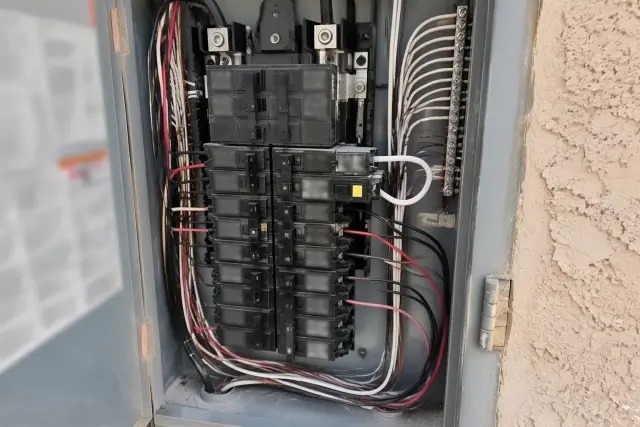
A dual-function breaker combines both protective functions at the panel. Its labeling and compatibility matter more than its resemblance to the breaker beside it.
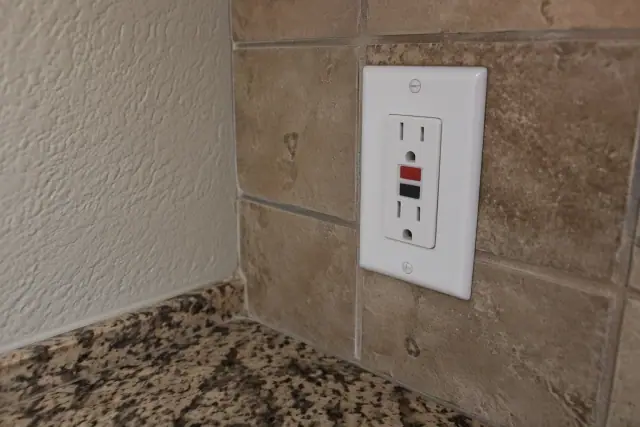
Countertop receptacles are a familiar place to find GFCI protection. The kitchen circuit also needs to be checked for AFCI protection and any other outlets it supplies.
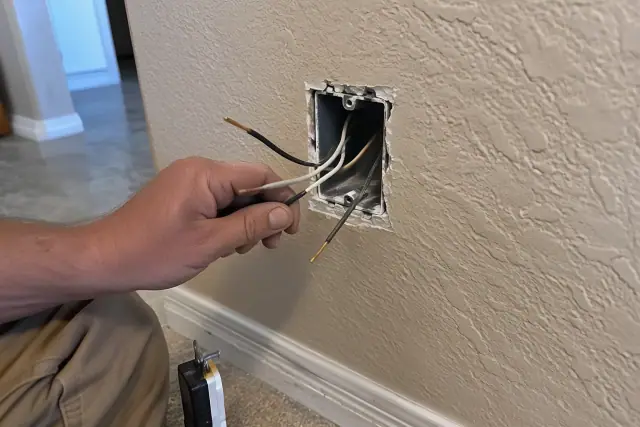
An inspection can uncover loose terminals, damaged insulation, or older wiring that needs attention. Protective devices cannot repair an existing wiring defect.
Common 120-volt, 15- and 20-amp bedroom, living room, and den circuits fall within AFCI requirements. A GFCI requirement can also apply where a receptacle has a qualifying location, such as near a sink.
Ordinary kitchen and laundry receptacle circuits are common overlap areas. Under the 2023 NEC, kitchen GFCI coverage extends beyond countertops, so a refrigerator outlet behind the appliance should not be assumed exempt.
Bathroom vanity and garage receptacles generally require GFCI protection. AFCI is a separate question, especially if the same circuit also supplies an area where arc-fault protection is required.
Recurrent trips, loose connections, and deteriorated insulation deserve investigation. Do not bypass a protective device to keep power on; have the cause evaluated before deciding whether repair or rewiring is appropriate.
These common residential cases help frame the inspection. The circuit layout, equipment, and code applicable to the work determine the final requirement.
| Circuit or location | Protection to check | What affects the answer |
|---|---|---|
| Kitchen receptacles | AFCI and GFCI on typical 120-volt, 15- or 20-amp circuits | Include refrigerator outlets; kitchen GFCI coverage under the 2023 NEC is broader than countertops. |
| Laundry receptacles | AFCI and GFCI on typical 120-volt, 15- or 20-amp circuits | Evaluate a larger dedicated dryer circuit separately. |
| Bathroom vanity receptacles | GFCI; AFCI is not generally required for a bathroom-only circuit | Check whether the circuit also serves another room. |
| Garage and patio receptacles | GFCI; these locations alone do not trigger AFCI | Outdoor devices also need the appropriate weather protection. |
| Bedroom and living room circuits | AFCI on covered circuits | GFCI may also apply to a receptacle in a qualifying location. |
| Pool and spa equipment | Equipment-specific GFCI review | Check the equipment instructions and circuit requirements rather than applying a kitchen circuit rule. |
An arc-fault circuit interrupter monitors for electrical patterns associated with dangerous arcing, which can develop at a loose terminal or damaged conductor and start a fire. A ground-fault circuit interrupter compares outgoing and returning current, interrupting power when leakage reaches its trip threshold, typically in the 4-6 milliamp range for Class A protection. The two devices address different hazards, so an AFCI-only breaker does not provide the GFCI protection required at a bathroom or kitchen receptacle. Dual-function breakers combine these capabilities; UL 1699 addresses AFCI protection and UL 943 addresses GFCI protection. The electrician must select a device listed for the application and compatible with the panel.
Phoenix uses the 2023 NEC with local amendments, and the code applicable to the permit guides the circuit plan. NEC 210.8 covers GFCI requirements, while NEC 210.12 covers AFCI requirements; appliance type, circuit use, and renovation scope affect how those rules apply. Panel compatibility and wire condition also determine whether a dual-function breaker or separate protective devices are appropriate. In older homes near Encanto Park and elsewhere in the Phoenix metro area, aluminum conductors or knob-and-tube wiring should be assessed on their condition rather than treated as an automatic diagnosis. Pool and spa equipment needs its own equipment-specific review, including the manufacturer-specified circuit rating. Ask for a scope that identifies any wiring repairs, required protection, and inspection steps before work begins.
Can an AFCI breaker and a GFCI receptacle work together? Yes, when an electrician arranges the devices so the required parts of the circuit receive the appropriate protection. Do I still need GFCI outlets if I have AFCI breakers? An AFCI-only breaker leaves the GFCI requirement to be met; if a suitable dual-function breaker already provides that protection, a separate GFCI receptacle is generally unnecessary. Does a refrigerator need both? A typical kitchen refrigerator receptacle circuit needs both under the 2023 NEC, even when its outlet is behind the appliance. Kitchen microwave and dishwasher circuits also need their appliance and circuit requirements checked. Is combination AFCI the same as dual-function? No. Combination AFCI describes protection against series and parallel arcing; dual-function AFCI/GFCI includes ground-fault protection too.
For a rewiring project or panel upgrade, note which rooms and appliances are involved and whether any protective devices keep tripping. An electrical safety inspection can establish what protection is already present, what the work requires, and whether the wiring needs attention before new devices are installed.