What Diagnostic Results Reveal
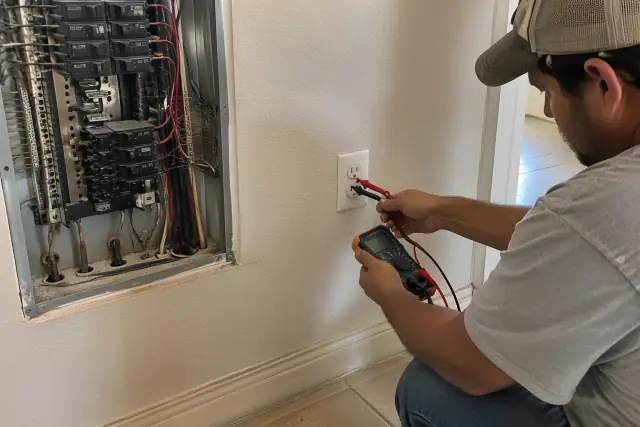
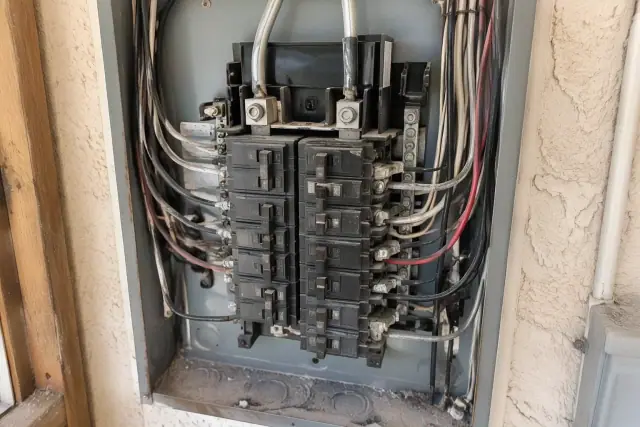
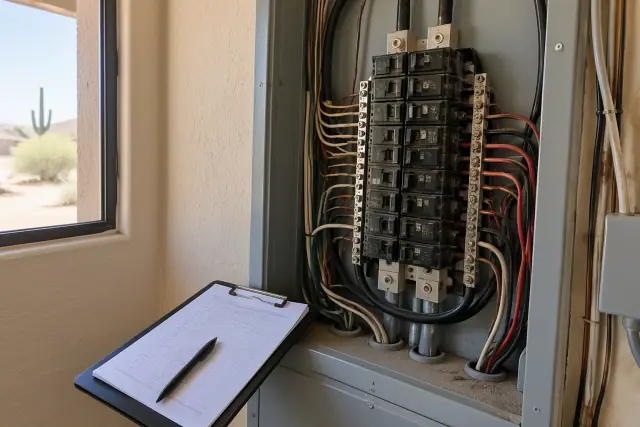
A diagnostic starts with the visible condition of the panel, wiring, and connections, then uses instruments to narrow the search. A dead stretch of outlets may trace to a failed backstabbed connection or a junction box, while flickering across several rooms can point to a loose neutral at the panel or service entrance. A GFCI outlet that will not reset, a buzzing outlet, or a warm switch plate also warrants assessment. An electrical burning smell calls for prompt professional attention because it can indicate overheating at a connection, breaker, or panel bus bar. Testing describes the system at the time of inspection; it cannot predict every future failure with certainty.
Why Older Wiring Changes the Scope
In Phoenix homes built before 1974, identifying knob-and-tube or aluminum branch wiring helps define the inspection scope. Original 1950s and 1960s wiring in areas such as Coronado, Willo, and parts of Sunnyslope may need additional connection and insulation checks. Sustained summer air-conditioning loads can expose weak connections or undersized wiring, while added EV chargers and appliances change what the home needs to supply. Newer construction can also need troubleshooting, such as an Ahwatukee home with a repeatedly tripping AFCI breaker. A diagnostic helps determine whether the issue is confined to a device or circuit, or whether a broader assessment is needed before a rewire.
Common Follow-Up Questions
What happens before physical inspection? The electrician isolates the circuit, verifies that it is de-energized with appropriate test equipment, and controls the risk of accidental re-energization. Live measurements, where needed, belong with a qualified electrician. Does the diagnostic fee include the repair? Usually it covers locating the fault; ask for the repair scope and price separately and confirm any credit toward that work. What if a code concern appears? Ask the electrician to document the finding, explain the relevant National Electrical Code provision, and identify the corrective work. A missing GFCI and undersized service entrance conductors can involve very different repairs. If a panel change, such as a 100-amp to 200-amp upgrade, is proposed, ask how the diagnostic findings support that recommendation.